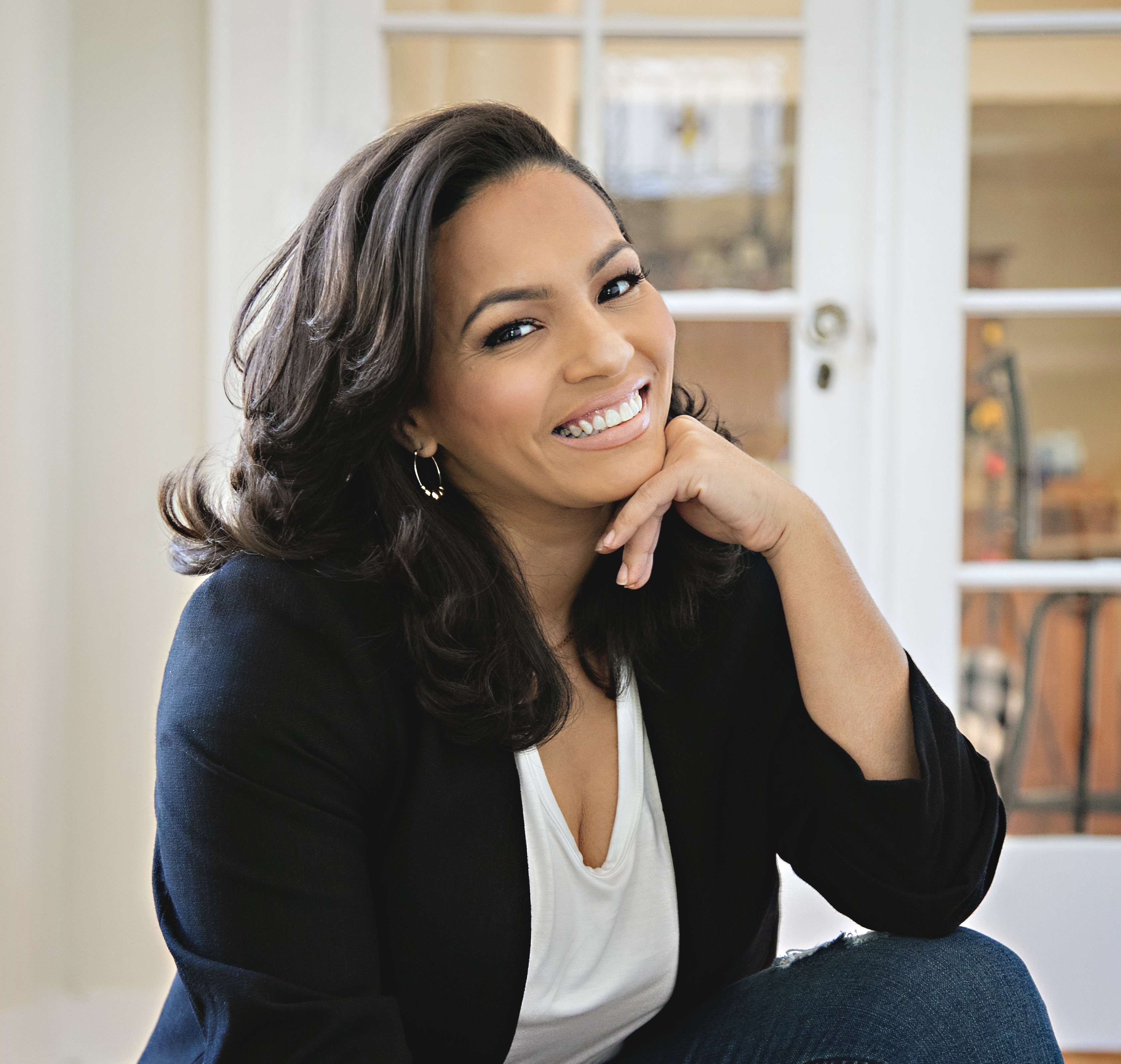
Empowerment Series: Latina Actress from “Freedom Writers,” “Persons of Interest,” “Dexter,” Author, Speaker, and Creative Director at Lionchaser Media, April Hernandez-Castillo Shares Generational Trauma with AW
The goal of this platform has been to blow the doors off topics that for decades have been taboo, ignored, or shameful in some way. Generational trauma can be a bad word in the Latino community. The cycle of trauma is passed down across generations and impacts families physically, mentally, emotionally, and psychologically. It is important to understand that trauma can stem from biological or learned behaviors and can happen to an individual or group of people.
The most commonly known generational trauma derives from abuse, such as domestic violence, and physical, emotional, or sexual abuse but there are others. Substance abuse, depression, poverty, genocide, emotional numbness, slavery, war, natural disasters, and even difficulty trusting others. We may not necessarily pass on the traumatic experience but can transmit the anxiety to our younger generations, as early as, in utero.
Like many of us, April Hernandez-Castillo has lived through generational trauma and has broken the cycle. The Actress, Author, Speaker, and Creative Director at Lionchaser Media is best known for her performance in the film “Freedom Writers” starring Hillary Swank. In it, she plays Eva in the convincing role of a tough Latina gang member. Her career was just taking off but behind the scenes in her real life, April was secretly dealing with a tumultuous past.
The Latina grew up in the mean streets of The Bronx in New York City. She was a witness to the crack epidemic era that was ravaging the neighborhood at the time. Her struggles began at home with a mother who had her trauma, while April was in a relationship with an abusive boyfriend. It was a lot for a teenager to handle, to say the least. But her story is one of resilience and forgiveness. She shared a piece of her journey with AW and how she went from trauma to strength.
The term “generational trauma” is showing up more often these days. Where did your journey begin? Can you share how you came to your realization? Did you see the patterns and how did you finally get unstuck? I grew up in the Bronx during the early 1980s and beginning 1990s during the war against crack. The slogan “Crack is wack” came from the epidemic that was being fought. I remember watching the film, New Jack City and thinking, “Wow, I am growing up in a neighborhood that looks like that!” Washington Heights was hit hard, as was The Bronx. Sadly, it’s still a dangerous place today. I was raised in a loving home and did not see abuse between my parents. My mom played more of the aggressive role but I did not understand her story until I was much older. Now, I can see the mental and emotional abuse that resulted from that situation, it took a lot of self-work. Unfortunately, between the ages of 16 to almost 20 years old, I was in a physically and emotionally abusive relationship. Eventually, things led to him almost taking my life and forcing me to escape. At one point, I wanted to take my own life then became pregnant and had an abortion. There was so much happening that I didn’t understand. You don’t realize how much of that trauma you carry on into your adult life. The way it affects your decisions, professional environment, and intimate relationships. My family and friends had no idea. The only person who knew is my now-husband. It wasn’t until I did “Freedom Writers” in 2007 that I began speaking out. I finally grasped my story then decided to make a change to leave a very toxic relationship. I would not allow that moment to define me.
Abuse looks different for everyone. No one wants to be abused. When you find yourself in that deep web, sometimes, you don’t realize that you are in an abusive relationship. As women, we prioritize empathy for others more than ourselves. In the Latino culture, we have a hard time putting ourselves first. I knew that I had to walk away from the relationship, as soon as I had thoughts to kill myself. The idea of suicide was not something we talked about because there were plenty of ways to hide from the pain.
Some signs and symptoms of emotional trauma include anxiety, detachment, lack of self-worth, poor life skills, social isolation, negative thoughts, and general disinterest. Did you notice any of these behaviors and if so, how did you cope? What were some red flags that kept coming up, telling you something was not right? Your gut tells you when something is not right. But, if you come from a family where you have never seen a healthy relationship then where is your point of reference? We all have that animal instinct that tells us when something doesn’t feel good. When your partner is hitting you that is a hard sign. How about when it isn’t physical abuse, and it’s verbal or emotional? When a partner talks down to you, humiliates you, and gaslights you (psychological manipulation). You begin to shift from who you are or let them use their power to instill fear in you, those are all signs of trouble.
Acknowledging and freeing ourselves from trauma takes a lot of internal work. It’s never easy to talk about it and you wrote a whole book to share it with the world. Why did you feel it was important to do this? When you survive something and have been able to heal, be successful, find love, and forgive yourself then it is a gift from God. Healing is possible and you are worthy of it. I have spoken on many stages and many women with trauma who cannot speak on it. Healing can be a lifelong journey. I wrote the book for the little girl and teenager in me who did not have this type of book growing up, the woman who is secretly ashamed and can’t move past it. She feels unworthy, and the man wonders how can he be a better husband and father. He does not want to repeat a cycle of abuse. The book offers insight into how abuse truly affects us as human beings. Stories impact lives, it’s the reason we do what we do.
Write your story, even if no one ever sees it. It doesn’t matter, no one’s going to judge your words. Doesn’t matter if no one reads it but you deserve to express your pain and what you are going through because your words matter.
You have written a book and it is all out there to see. How do you deal with your children knowing about your trauma? I can’t wait for my daughters to read the book. Certain chapters she can read now at 10. In other sections, she can read when older because there are things she can process better. I wrote this book during the height of the pandemic. It has been amazing for my daughters to see me writing. She saw me cry at times and encouraged me. I let her empower me and pray for me. It’s something my mom never allowed me to do for her. These are all the ways we have been breaking the cycle because my mom was an alpha. I always say, my dad taught me how to love and my mom taught me how to fight.
Everyone needs support, there is always some sort of baggage to deal with in life. The topic of generational trauma is complicated and we are complex beings. What resources did you use to unfold the trauma that was left behind? Before I began speaking, I needed to understand domestic violence and intimate partner violence. I took classes with an organization called Connect Institute in New York. They have been mentors, showing me why it happens, and as a speaker, it is important for me to be responsible and know how to speak to men and women who are trying to improve their lives. My team also includes a therapist.
At the end of our interviews, we like to share a piece of advice, mantra, or quote to help our community work to be better selves. For anyone trying to navigate generational trauma and looking to break the cycle. What words can you offer to help them get started today? Everything begins with one step. Stop faking it to make it because that won’t bring you anything but more pain. Life is overwhelming but when you make the choice to live a life that is fulfilling and filled with purpose, everything changes. You need to make the decision, whatever that is for you.
AW is incredibly grateful to April for allowing herself to be vulnerable with our community. We feel less alone when someone else shares their story. Each time we tell our experience, there is the possibility to impact lives. It is one of the best ways to inspire change.
For too long, generational trauma has been the skeleton in the closet that everyone wanted to hide. It is time to let go of the shame connected to our past. You are the key to breaking the cycle. Acknowledging family history and making an effort to understand the events that took place is a good starting point. It’s scary to have difficult conversations but necessary. Seeking a mental health professional to help work through things is encouraged, as you move forward with healing. You will be better for it, and so will your children, if there are any.
We hope that April’s story opens the door for anyone processing trauma. Give yourself grace and be patient with your feelings. You are entitled to feel what you feel. Recovery time is different for everyone. One thing is for sure, it requires years of internal work, and like she said, “It starts with one step.”
To learn more about April, visit her Instagram@Aprilhernandez, and LinkedIn@April Hernandez or her website. Her book “Embracing Me” is available on Amazon.
Listen to the AW Confidential Podcast on all streaming services. You can also watch this episode AW Confidential YouTube to enjoy all the side chats during the interview.
*This interview has been edited and condensed for clarity.
Protected content. 2023 awakened-woman.com



Empowerment Series: Dominican Comedian, Writer and Producer, Glorelys Mora Shares the Tea with AW – Awakened-Woman
January 25, 2024 @ 6:33 pm
[…] conversation about family, the departure from the corporate world, her comedy, generational trauma, love, relationships, moving to Los Angeles, and everything in between. We connected instantly, as […]
Empowerment Series: Actress from Apple TV+ Sugar, Peacock’s Apples Never Fall, and Showtime’s L Word: Generation Q, Paula Andrea Placido Shares her Authentic Self with AW – Awakened-Woman
May 13, 2024 @ 11:24 pm
[…] of the day, they are not the ones living in these shoes. Pause to reflect. Mute the outside voices. Silence everything on the outside. There are plenty of distractions. People will tell you who they think […]
Empowerment Series: Esmeralda Baez, Author, Founder, Elite Vision Media on Healing, Heartbreak, and Choosing Peace Over Potential – Awakened-Woman
August 11, 2025 @ 9:46 am
[…] unapologetically. She described the love that starts with fairytale gestures and ends in emotional chaos. The kind that makes you believe you’ve found something rare until the red flags start waving in […]